Home > Rainha Santa Isabel
Rainha Santa Isabel
July, 1271 (Zaragoza, Spain) – July, 1336 (Coimbra, Portugal)
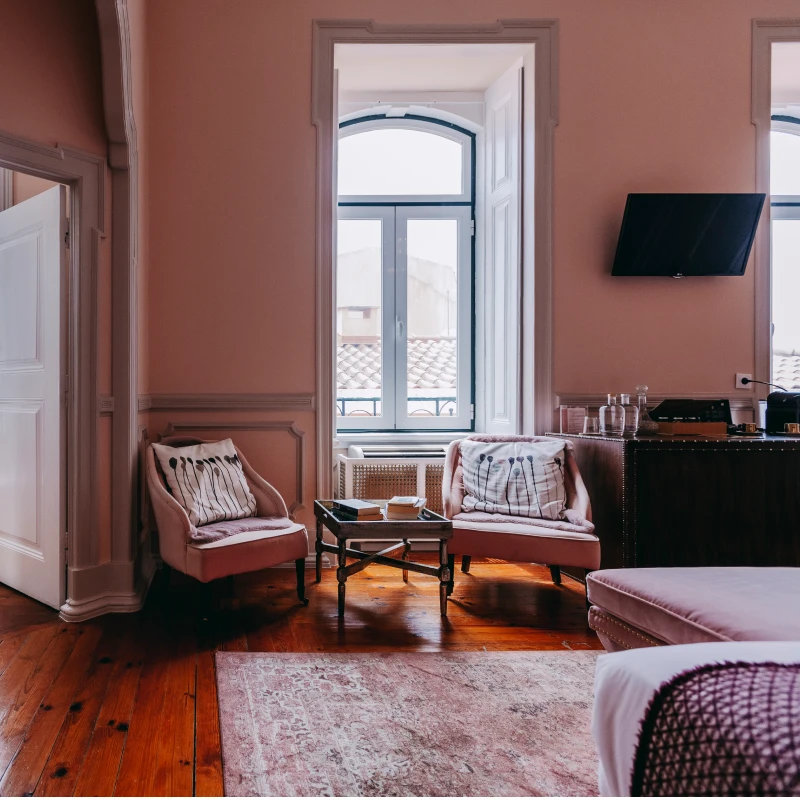
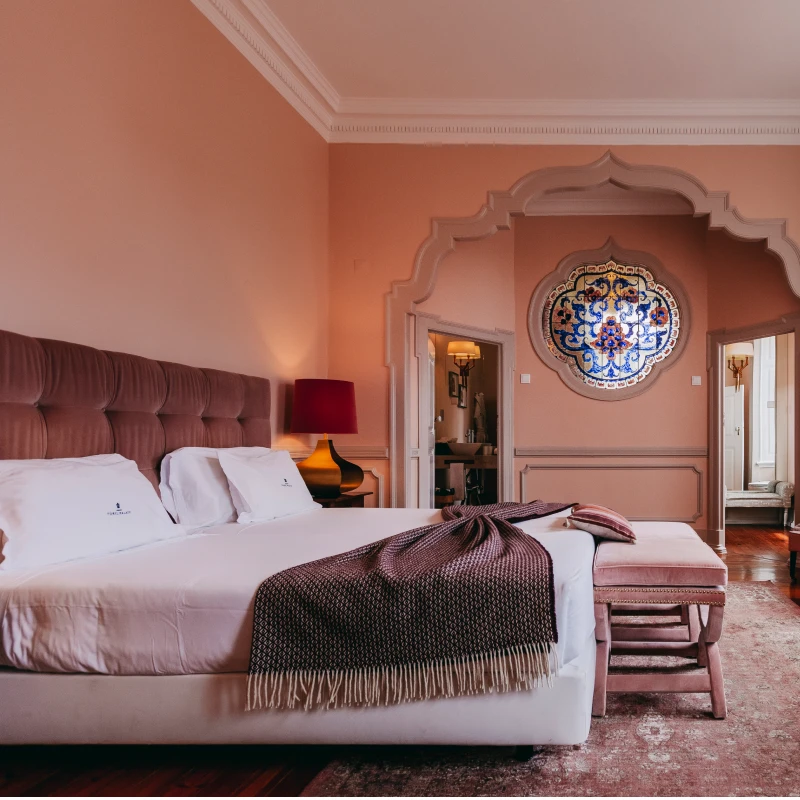
Its refined decoration in a classic and modern style was inspired by Queen Santa Isabel. It stands out for its original features such as the colorful stained-glass window between the bathroom and the bedroom worthy of a mansion.
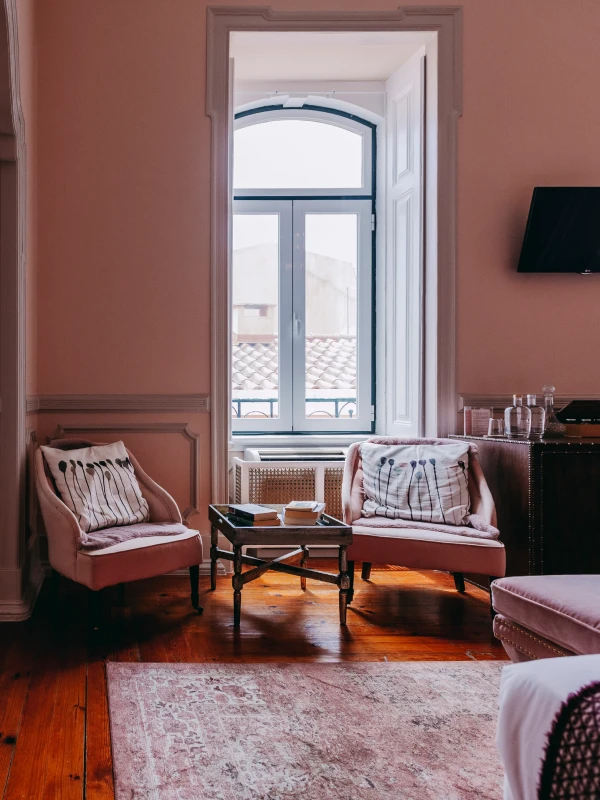
The Master – Rainha Santa Isabel offers elegance and comfort for up to two guests. This spacious room features a twin bed, a large chandelier, and architectural details, including a beautifully crafted tile feature at the center of the room. Soft pink tones create a warm and inviting atmosphere, complemented by sofas and chairs that provide a relaxing seating area. The private balcony completes the space with a pleasant view.
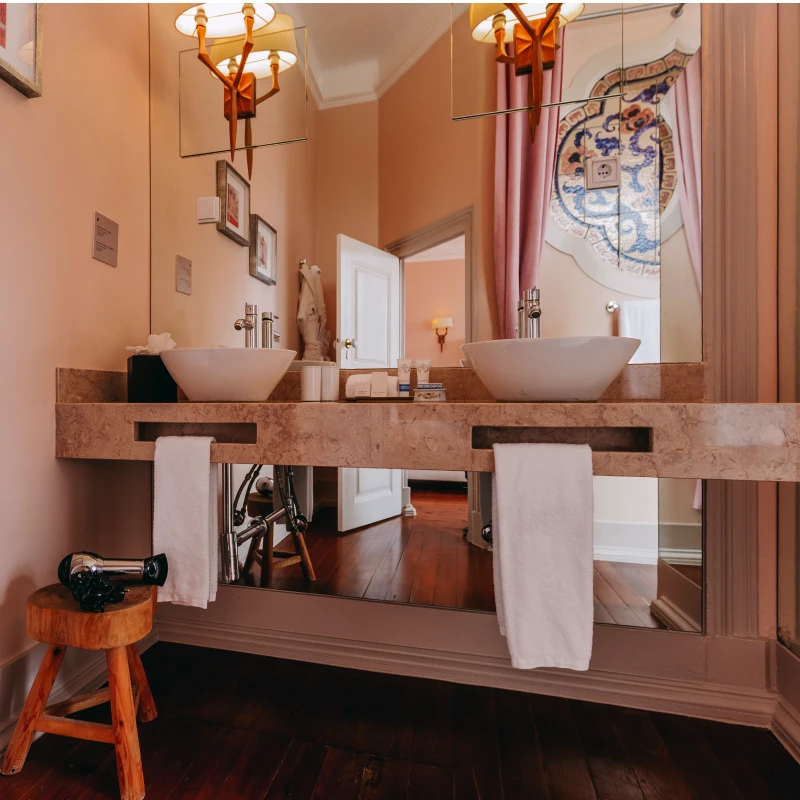
The bathroom reflects the room’s sophistication, with two sinks and tasteful decor that enhances the clean and refined design. Amenities include a Delta coffee machine, minibar, TV, free Wi-Fi, air conditioning, hairdryer, and safe. Guests enjoy complimentary coffee and water throughout their stay for a truly comfortable experience.
See our other rooms in the Master category
- Up to 3 People
- 37 m2
- 2 Twin Beds
- Coffee Machine
- Mini Bar
- Television
- Free WiFi
- Air Contitioning
- Hairdryer
- Safe
- Offer of Delta Coffee and Water throughout your Stay


In Honor of...
Rainha Santa Isabel
Rainha Santa Isabel, also known as Saint Elizabeth of Portugal, was a queen renowned for her piety, charity, and peacemaking. She married King Dinis I of Portugal, becoming queen consort in 1282.
Throughout her life, Isabel dedicated herself to the poor and sick, founding hospitals and religious institutions, and mediating conflicts — including between her husband and their son. Her compassion earned her widespread admiration during her lifetime.
One of the most famous legends associated with her is the “Miracle of the Roses,” where she was said to have turned bread into roses to conceal alms she was carrying to the poor.
After her death, she was canonized by the Catholic Church in 1625, becoming Portugal’s first queen saint. Her legacy as a symbol of mercy, peace, and devotion continues to inspire to this day.